

 RU
RU


Top five questions you should ask when selecting the right reamer
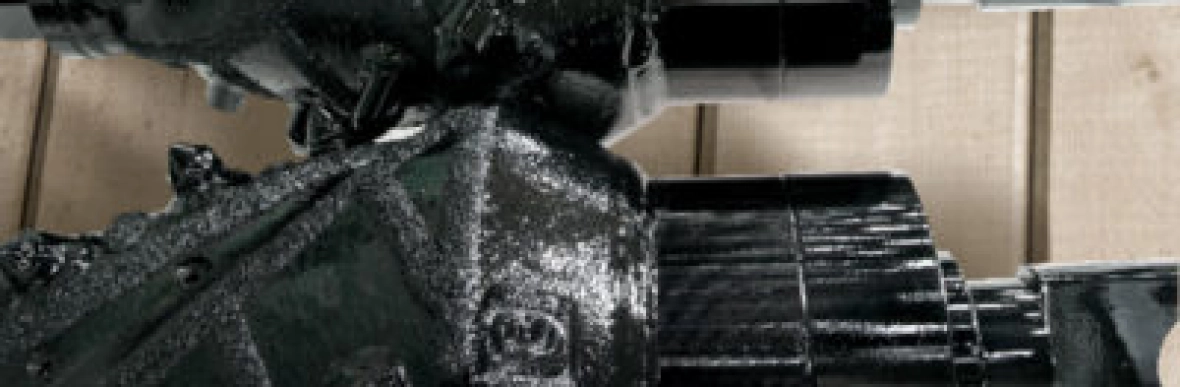
Creating the plan for your next project can be complicated. One of the many decisions you have to make is what kind of reamer you’ll use when you’re opening the borehole and installing the product. There are a lot of reamer options to choose from, and if you aren’t asking the right questions, you might arrive at a wrong answer. To help you select the right reamer for your next project, ask and answer these five questions.
WHAT’S THE SOIL CONDITION YOU’LL BE WORKING IN?
The first thing you have to consider is the soil that you’ll be working with. Is it sand or clay or rock?
“Mixer-style reamers are designed to maintain flow in high-moisture clay and sandy conditions,” said Chris Fontana, a lifecycle sales manager. “Packer-style reamers are preferred in dryer, compacted soil or loose rock. When harder, consolidated rock is encountered, a range of tools with specialty cutters are available depending on the hardness and consistency of the rock.”
For each different soil condition, there is an ideal reamer.
WHAT’S THE SIZE AND MATERIAL OF THE PRODUCT YOU’LL BE PUTTING IN?
Next, you should be thinking about how big and what kind of product you’re installing. After you know the answer to that, you can select your reamer based on the size of the pipe and the material. This is important because reamers can come in a variety of different sizes.
“We recommend that your reamer size is at least 1.5 times the widest product pipe pack that you’re pulling through,” explained Fontana. “So, if you’re pulling a 4-inch product through the hole, you need at least a 6-inch reamer.”
The length of the project, the type of ground conditions and the allowable bend of the product pipe being installed may require the bore to be opened up beyond the 1.5 times rule.
DO YOU NEED TO DO ANY PRE-REAMING?
You should also ask yourself if you need to pre-ream. For larger diameter installations, a series of pre-ream stages are likely required to upsize the bore prior to final pullback of the product pipe. It’s not possible to go from an 8-inch hole to a 30-inch hole. Instead, you’ll have to do it in segments, which is called pre-reaming.
“To do this, you’ll want to use a reamer that can smoothly be pushed back out of the hole, with an aggressive taper on the backside,” explained Fontana. “That way, it doesn’t meet resistance when it comes out of the hole.”
HOW DO I INCORPORATE A SWIVEL?
A swivel is used to isolate the product pipe from the rotation of the drill stem and is sized based on the pull force estimated to complete the project. Sometimes they are separate components, while others are integrated into the reamer.
For certain conditions, an integrated reamer/swivel may be beneficial. “Usually, the more space in between your product and your reamer, the greater the inefficiency,” said Fontana.
WHAT IS YOUR CONNECTION SIZE?
Lastly, consider your connection size. Reamers are built on a connection platform that’s based on the maximum pullback force and rotational torque of the HDD being used.
For example, if you have a horizontal directional drill, you’ll need a matching connection size to withstand the torque and pulling forces from the drill.
Overall, the main thing to remember is to match the connection to the machine.
After you’ve asked and answered these five questions, it’s time to select the right reamer for your operation.
